Changing SEO Results Through Custom Server Hardware Optimisation
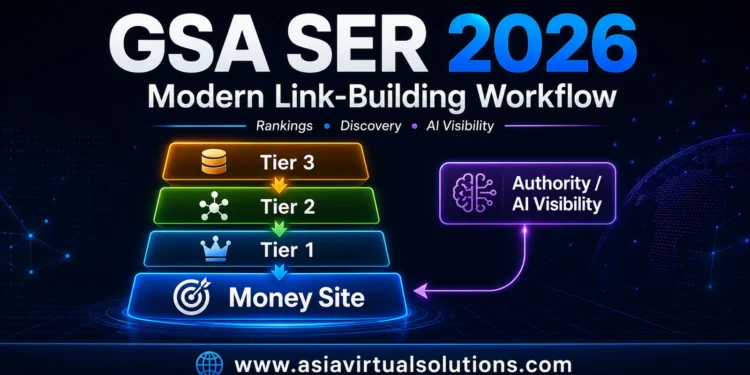
The Technical Advancement of Automated Link Building in 2026
Automated link building has gone through a significant improvement because the early 2020s. Software application tools like GSA Browse Engine Ranker (SER) continue to be staples for SEO professionals who require high-volume backlink generation. The efficiency of these tools depends less on the software settings themselves and more on the infrastructure supporting them. In 2026, the bottleneck for link building is hardly ever the script, but rather the latency in between the VPS, the proxy service provider, and the target web server.
Success in modern SEO needs a deep understanding of how server action times affect submission rates. When a VPS experiences even a few hundred milliseconds of hold-up, the multi-threaded nature of GSA SER begins to work against the user. High latency causes timed-out connections, stopped working captcha solves, and eventually, a lower return on financial investment for the hardware. Experts now concentrate on low-latency environments to make sure that every thread remains active and productive throughout the day.
Selecting a server place is the initial step in this optimization. While many users previously selected servers based upon price alone, the 2026 market prioritizes proximity to significant internet exchange points. When thinking about investments in Wikipedia Definitions, speed remains the most substantial metric for success. A server located in a Tier 4 data center with direct peering to major Tier 1 suppliers will outshine a standard budget plan VPS whenever, no matter the raw CPU core count.
Network Optimization for automated SEO in 2026
Latency is the enemy of any automated procedure that depends on countless concurrent connections. In 2026, the international internet backbone has actually become more fragmented, making direct peering agreements more crucial than ever. For GSA SER users, this indicates the physical range between the VPS and the proxies is just as crucial as the distance to the target sites. If your proxies are situated in Western Europe but your VPS remains in a remote part of Asia, the round-trip time for every single single link submission will cripple your output.
Top-tier VPS companies now provide specialized network paths optimized for scraping and high-frequency requests. These routes bypass standard busy courses, providing a cleaner signal for automated tools. When the server reacts quickly, the software application can cycle through threads faster, enabling a much higher "LPM" or links per minute. In the competitive environment of 2026, maintaining a high LPM is the only method to remain ahead of the indexing curve, as search engines have actually ended up being faster at identifying and cheapening low-grade footprints.
Bandwidth likewise contributes, though it is often misinterpreted. While a 10Gbps connection sounds excellent, it is the stability of that connection under load that matters. Automated link structure creates a huge variety of little packages. Some lower-end network cards and routers battle with high packet-per-second (PPS) counts even if the total megabits utilized are low. Guaranteeing the VPS uses premium virtualized networking drivers is vital for avoiding crashes throughout peak submission periods.
Hardware Specifications and CPU Clock Speeds
GSA SER is famously CPU-intensive, especially when keeping up hundreds of threads and complicated filter settings. In 2026, the dispute in between high core counts and high clock speeds has actually mainly been settled in favor of clock speed. While more cores permit more threads, each individual thread needs to process regex filters and HTML material quickly. A VPS with fewer, much faster cores (surpassing 5.0 GHz in 2026 standards) typically carries out better than a server with 32 slow cores that have a hard time to stay up to date with the logic requirements of the software.
RAM speed has also become an element that SEO specialists can no longer disregard. With the transition to DDR6 memory in contemporary information centers, the latency of data moving from the processor to the memory has dropped. This speed increase is particularly visible when the software is managing big "verified" lists or website lists including countless URLs. If the RAM can not feed the CPU fast enough, the software application will appear to hang or "stutter," causing threads to stall. High-performance Wikipedia Web Hosting Service Entry has actually ended up being a staple for companies handling countless regular monthly backlinks.
Storage innovation has likewise moved forward. In 2026, standard SATA SSDs are considered legacy hardware for high-intensity SEO jobs. NVMe Gen 6 drives are the current requirement, offering read and write speeds that avoid the software from securing when writing logs or upgrading enormous databases. Because GSA SER continuously writes to the disk to track effective submissions and failed attempts, a sluggish drive will quickly end up being a system-wide traffic jam.
Proxy Combination and Reaction Times in the regional market
Proxies are the lifeblood of automated link structure, but they are also the most typical source of latency. Even the fastest VPS can not overcome a sluggish proxy. In 2026, the industry has approached "backconnect" property proxies that turn instantly, however these often add significant overhead to each demand. Technical users now prefer a hybrid method, utilizing high-speed private data center proxies for the initial scraping and property proxies only for the final submission stage.
The handshake in between the VPS and the proxy server should preferably take less than 50 milliseconds. Anything greater suggests that the VPS is not well-located relative to the proxy provider's entry nodes. Evaluating this latency using simple command-line tools before beginning an enormous campaign is a standard treatment for 2026 SEO technicians. Reducing this preliminary hop time can increase the general success rate of a campaign by 20% or more, as it decreases the chance of the target site's server closing the connection too soon.
The reputation of the IP addresses provided by the VPS host matters. While GSA SER utilizes proxies to conceal the server's identity, lots of modern firewall programs can discover the underlying data center IP if the proxy leaks any headers. Using a VPS provider that provides "tidy" IP varies-- those not currently flagged by major CDN companies-- adds an extra layer of protection to the link building operation. This is especially real when targeting high-authority websites that use innovative bot-mitigation services.
Optimizing Windows Server for GSA SER
A lot of automated link building tools still run primarily on Windows. By 2026, Windows Server 2025 and 2026 editions have introduced numerous features that can be optimized for background jobs. Stripping away unneeded visual results and disabling telemetry services is just the start. Advanced users now use PowerShell scripts to prioritize the GSA SER procedure within the CPU scheduler, guaranteeing it gets the maximum available cycles even when the system is under heavy load.
TCP/IP stack optimization is another area where substantial gains are made. By default, Windows restricts the variety of concurrent half-open connections to avoid the spread of malware. However, for a tool that requires to examine countless websites per minute, these limits are restrictive. Adjusting the registry to enable a greater volume of ephemeral ports and faster connection recycling permits the VPS to manage the "churn" of automated link building without running out of readily available network resources.
Security stays a concern. While it might be tempting to disable the firewall program for a minor performance boost, the 2026 danger environment makes this a dangerous move. Rather, experts configure granular rules that enable the link structure software application through while blocking all other unsolicited traffic. This avoids the VPS from being utilized in a botnet or being compromised by the extremely websites it is trying to publish to, which is a common threat when scraping the deeper corners of the web.
The Role of Solver Latency
Captchas are the last hurdle in the automated process. In 2026, AI-driven captcha solvers have become extremely efficient, however they still present a hold-up. Whether utilizing a local solver like GSA Captcha Breaker or an external API-based service, the time it takes to send an image and receive a text string is a significant component of total latency. Local solvers are quicker but have lower success rates on complex 2026-era captchas, while API services are more accurate however count on a network round-trip.
The most reliable setups in 2026 use a tiered approach. The VPS first efforts to resolve the captcha in your area to reduce latency. If that stops working, it sends out the job to a high-speed API. Monitoring the "Time to Fix" metric in GSA SER is essential. If the typical fix time surpasses 5 seconds, the thread is efficiently squandered. Low-latency VPS hosting guarantees that the communication with these external solver APIs is as fast as possible, keeping the submission pipeline moving without unnecessary stops briefly.
Future-Proofing SEO Facilities
As we move through 2026, the gap in between amateur and professional link building continues to expand. The professional side is specified by a strenuous focus on technical infrastructure and latency reduction. It is no longer sufficient to just "run the software." The environment in which the software runs figures out whether it will create a few dozen links a day or a couple of thousand.
Success requires consistent tracking of server metrics. Successful operators use real-time control panels to track CPU load, disk I/O, and network ping times. When they discover a spike in latency, they examine the cause-- whether it is a faulty proxy, a busy network node, or a software application memory leakage. In the high-stakes world of 2026 search engine optimization, the winners are those who treat their VPS as an accuracy instrument instead of an easy energy. By focusing on low-latency hosting and hardware optimization, companies can ensure their automated link structure efforts remain efficient and scalable for years to come.