Why Your Company Requirements a Devoted SEO Server Strategy
Data Throughput Requirements for 2026 Link Building
Storage performance in 2026 has ended up being the primary aspect figuring out the success of high-volume SEO automation. As online search engine have actually increased the complexity of their confirmation systems, tools like GSA Online search engine Ranker (SER) require substantially greater input and output operations per second (IOPS) to maintain effective link-building threads. The days when a standard SATA SSD could manage 500 threads without stalling are gone. In 2026, the data structures used for site lists and verified URLs are bigger and more complicated, positioning enormous pressure on the disk subsystem of any Virtual Private Server (VPS)
The core concern involves the method GSA SER engages with its underlying database files. Whenever a thread tries to verify a link or examine a prospective target, it performs a read or write operation. When numerous threads perform these actions at the same time, a line kinds. If the storage drive can not clear this line faster than it grows, the CPU starts to experience "I/O wait" states. This leads to a server that appears idle in terms of CPU use however stays frozen or extremely slow due to the fact that the processor is awaiting information from the SSD. Many specialists focus on Michael Swart Masterclass when picking their hardware stack for link building to prevent these bottlenecks.
Handling Input-Output Operations in GSA SER
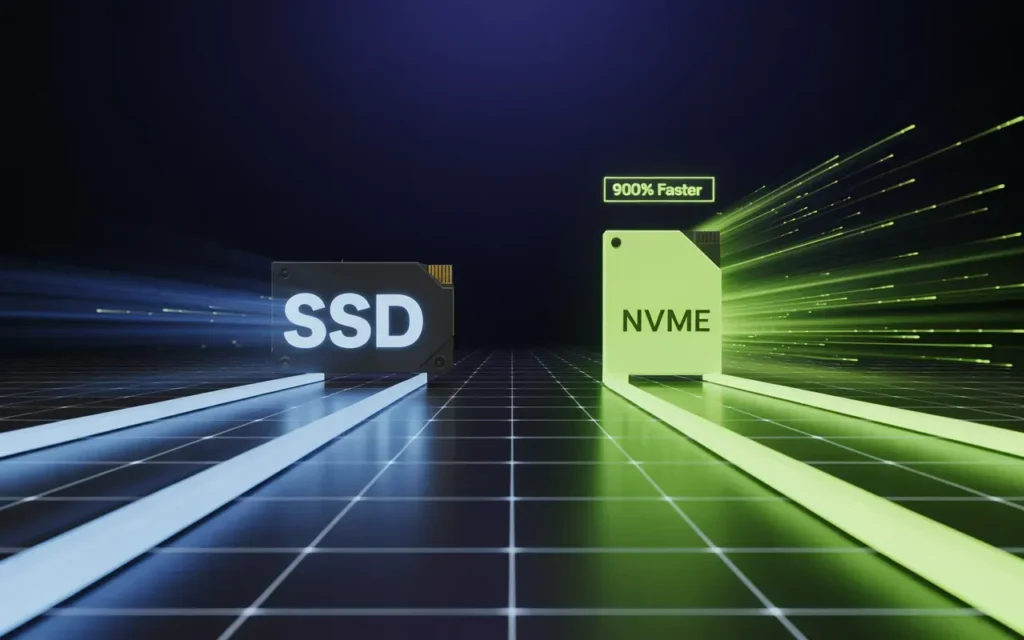
High-speed SSDs in 2026 utilize NVMe Gen 6 innovation, which supplies the bandwidth required to deal with massive parallel processing. When running automated SEO software application, random read and write speeds are much more important than consecutive speeds. While a drive might claim to move gigabytes of data per second, the ability to leap in between countless tiny files and database entries is what actually matters for GSA SER. This is where high-end NVMe drives distinguish themselves from budget VPS storage choices.
Effective management of international website lists in 2026 requires a storage medium that can manage countless little files. Many automated link-building campaigns now utilize extensive blacklists and recognized lists that surpass numerous gigabytes in size. Loading these into memory is one option, however the constant synchronization in between RAM and disk implies that the SSD stays an element. Need for Michael Swart Masterclass has increased as link-building algorithms end up being more resource-intensive, requiring hardware that can keep speed with quick data variations.

Hardware Requirements for Modern SEO Automation
Selecting a VPS in 2026 requires a cautious look at the hardware behind the virtual layer. Providers often oversubscribe their storage, meaning several users share the same physical SSD. In a high-thread SEO environment, this leads to performance destruction. Specialists now search for "dedicated IOPS" or "NVMe-backed circumstances" to ensure that their software does not suffer throughout peak usage hours. A server located in a major tech hub may provide low latency to proxies, but if the disk speed is mediocre, the advantage is lost.
The requirement for 2026 is making use of Enterprise-grade NVMe drives with high endurance scores. SEO automation is "write-heavy," implying it continuously composes logs, success files, and temporary data to the disk. Consumer-grade SSDs can wear out rapidly under these conditions, leading to data corruption or overall failure. Data stability is non-negotiable when managing countless active projects. Professionals typically look for SLC or high-end TLC NAND flash memory to ensure the durability of their server setups.
Reducing Database Contention through NVMe Efficiency
Database contention happens when numerous threads try to compose to the very same file at the exact very same time. GSA SER uses several SQLite databases to track development and verify links. SQLite is effective however relies greatly on the file system for locking systems. In 2026, the increased speed of NVMe drives allows these locks to be applied and launched in split seconds, preventing the "Database is Locked" errors that pestered older hardware configurations. Carrying out Michael Swart Video Tutorial Masterclass offers the required speed for high-volume link structure, allowing the database to cycle through thousands of entries without causing a system-wide hang.
Another factor is the combination of Write-Ahead Logging (WAL) This mode allows for greater concurrency, but it puts much more strain on the disk because it composes changes to a separate log file before merging them with the primary database. High-speed SSDs manage this dual-writing procedure with ease, whereas older storage types would fight with the doubled compose operations. When the server is pressing 800 or 1,000 threads, every microsecond saved money on a disk compose adds to a greater Links Per Minute (LPM) count.
Optimizing Virtual Personal Servers for 2026 SEO
Optimization begins with the filesystem choice. In 2026, lots of Linux-based VPS environments for SEO utilize XFS or Ext4 with specific installing alternatives to reduce disk overhead. Disabling access time updates (noatime) is a typical technique to minimize write cycles. On Windows-based servers, which prevail for GSA SER, NTFS efficiency can be improved by disabling 8.3 filename creation and changing the memory use for the system cache. These little tweaks, combined with a quick NVMe drive, create a stable environment for long-term automation.
Experienced professionals frequently select Michael Swart Video Tutorial Masterclass to deal with the huge input/output demands of automated tools. This choice often involves moving far from "budget plan" hosting companies that utilize older hardware. Instead, the focus is on companies in specialized regions that use specialized circumstances for data-intensive applications. The expense of a higher-tier VPS is typically offset by the increased effectiveness and the reduction in crashed jobs or lost data.
The Relationship In Between RAM Caching and SSD Speed
RAM remains faster than any SSD, however the 2 need to operate in tandem. In 2026, servers typically feature 64GB or 128GB of RAM for high-end SEO tasks. A big portion of this RAM is used as a file system cache. When GSA SER requests a file, the os checks if it is in the RAM cache first. Nevertheless, when the software composes information, it ultimately needs to be dedicated to the physical SSD. If the SSD is slow, the cache fills, and the entire system decreases to the speed of the disk. This "backpressure" is the quiet killer of numerous SEO projects.
Using a ramdisk for the "Temperature" folders and the GSA SER "App Data" folder is a technique used by power users in 2026. This moves the most frequent and short-term write operations into the RAM entirely. Nevertheless, the last verified lists and task files still need to reside on a high-speed SSD to ensure they are conserved if the server reboots. The balance in between unpredictable RAM storage and non-volatile NVMe storage is the trademark of a well-optimized 2026 SEO server.
Assessing Disk Latency in 2026 Environments
Latency is the delay between a demand for data and the delivery of that information. In the context of SEO automation, latency is simply as crucial as throughput. A drive that can move 7,000 MB/s however has a high access latency will carry out poorly when handling 500 threads. NVMe drives in 2026 have actually pushed gain access to times down to the sub-millisecond variety, ensuring that even under heavy load, the software stays responsive. Monitoring tools now enable users to track "disk line length" in real-time, supplying a clear photo of when hardware is reaching its limit.
The shift to Gen 6 NVMe storage has basically changed how SEO automation is scaled. In previous years, adding more CPU cores was the basic way to increase performance. Today, including faster storage or transferring to a server with a more effective I/O course often yields better results. For those running https://www.linkedin.com/pulse/mastering-gsa-search-engine-ranker-complete-13-video-tutorial-swart-xyfec, the hardware structure is the distinction between a project that generates countless links and one that stalls after an hour of operation. A concentrated approach on storage hardware guarantees that the software can carry out at its theoretical optimum without being kept back by physical limitations.